Advanced Eco-Certified
As a proudly Advanced Ecotourism Certified operator, we are recognised as one of Australia’s most progressive and innovative ecotourism businesses. This certification reflects our strong commitment to running our operations with the lowest possible environmental impact. We strive to create meaningful opportunities for guests to learn about and connect with the natural world, use resources responsibly and sustainably, actively support environmental conservation, and contribute positively to local communities. We also place great importance on respecting and preserving local culture and heritage in everything we do.

Go-Slow Whales Below
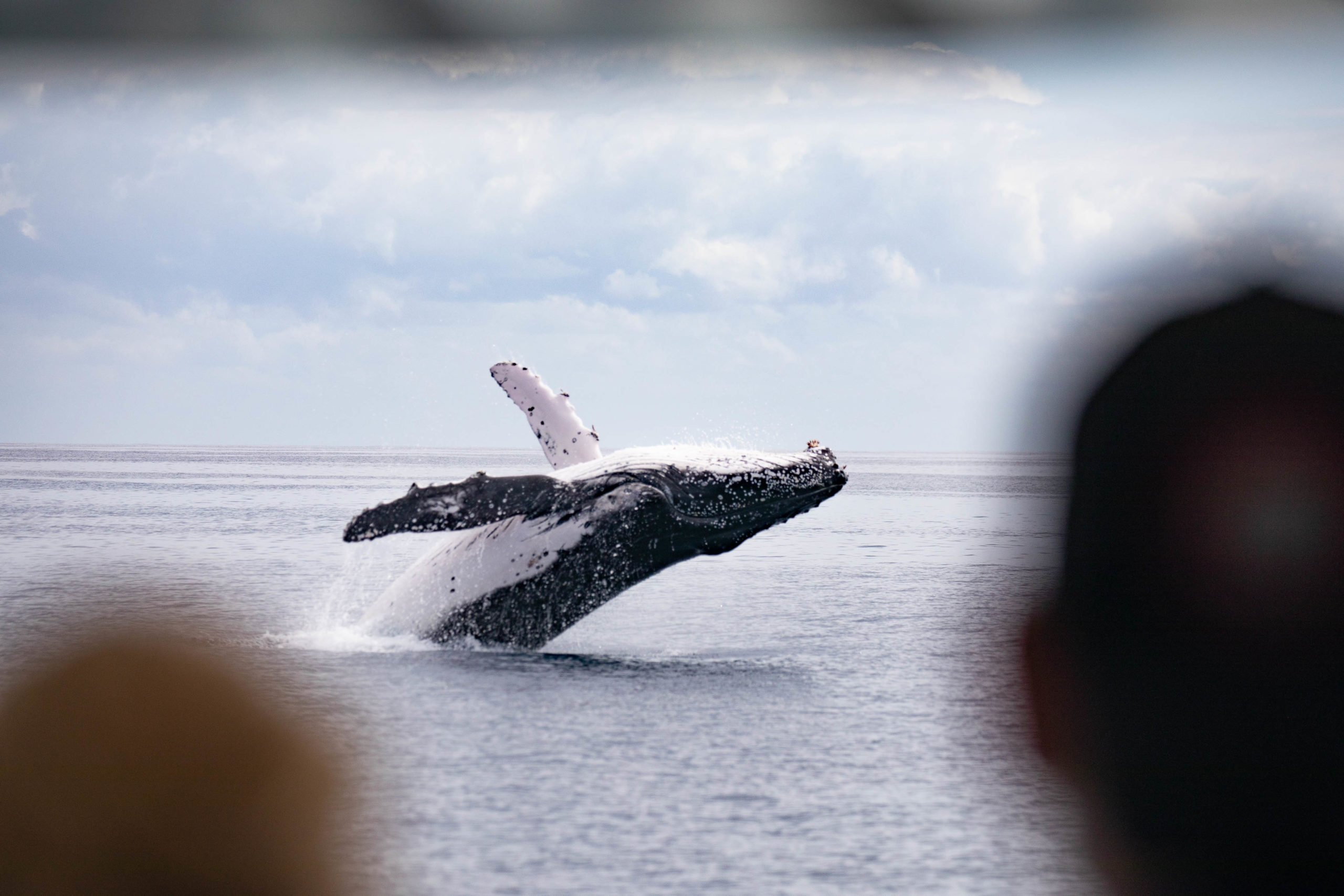
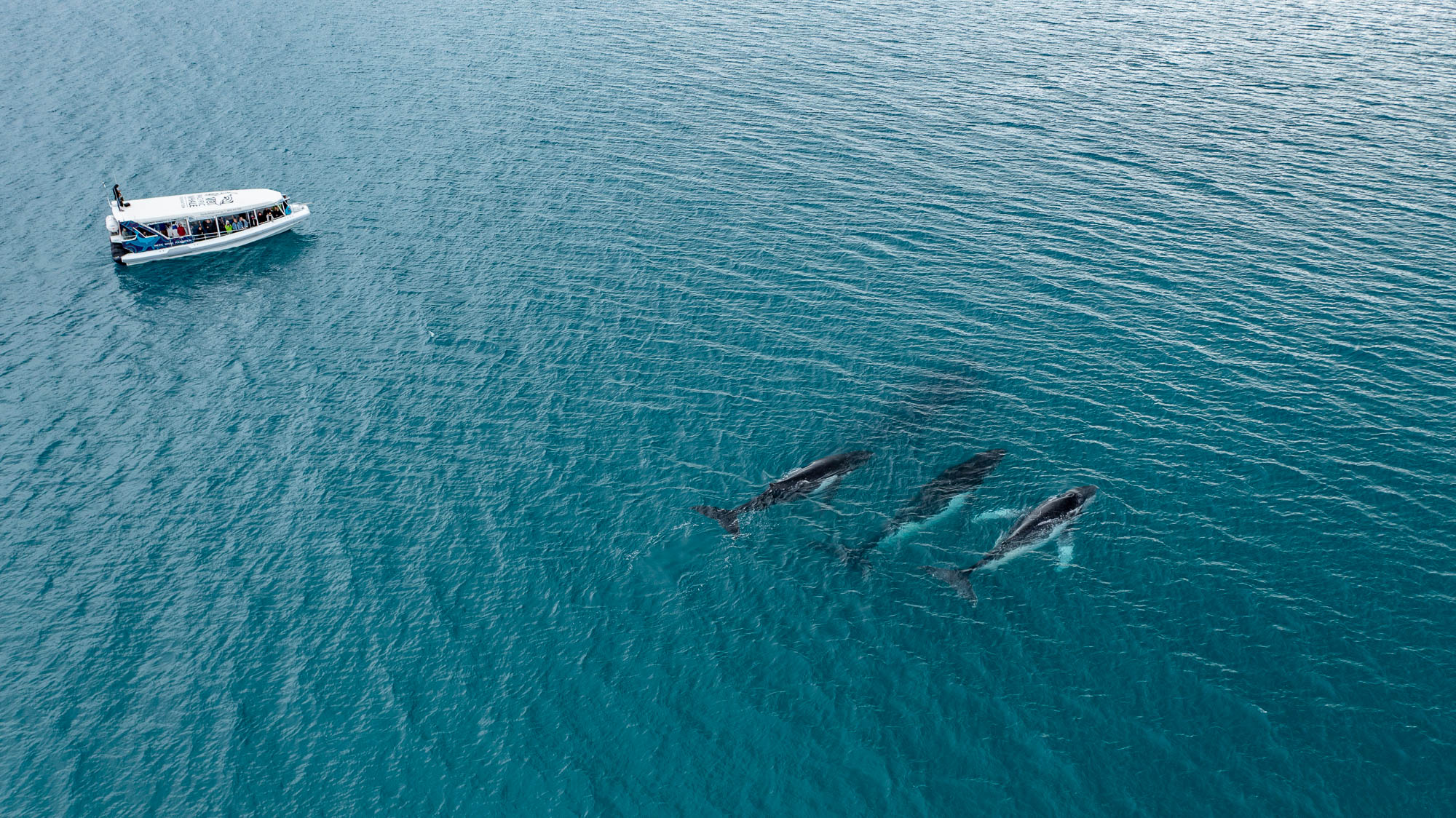
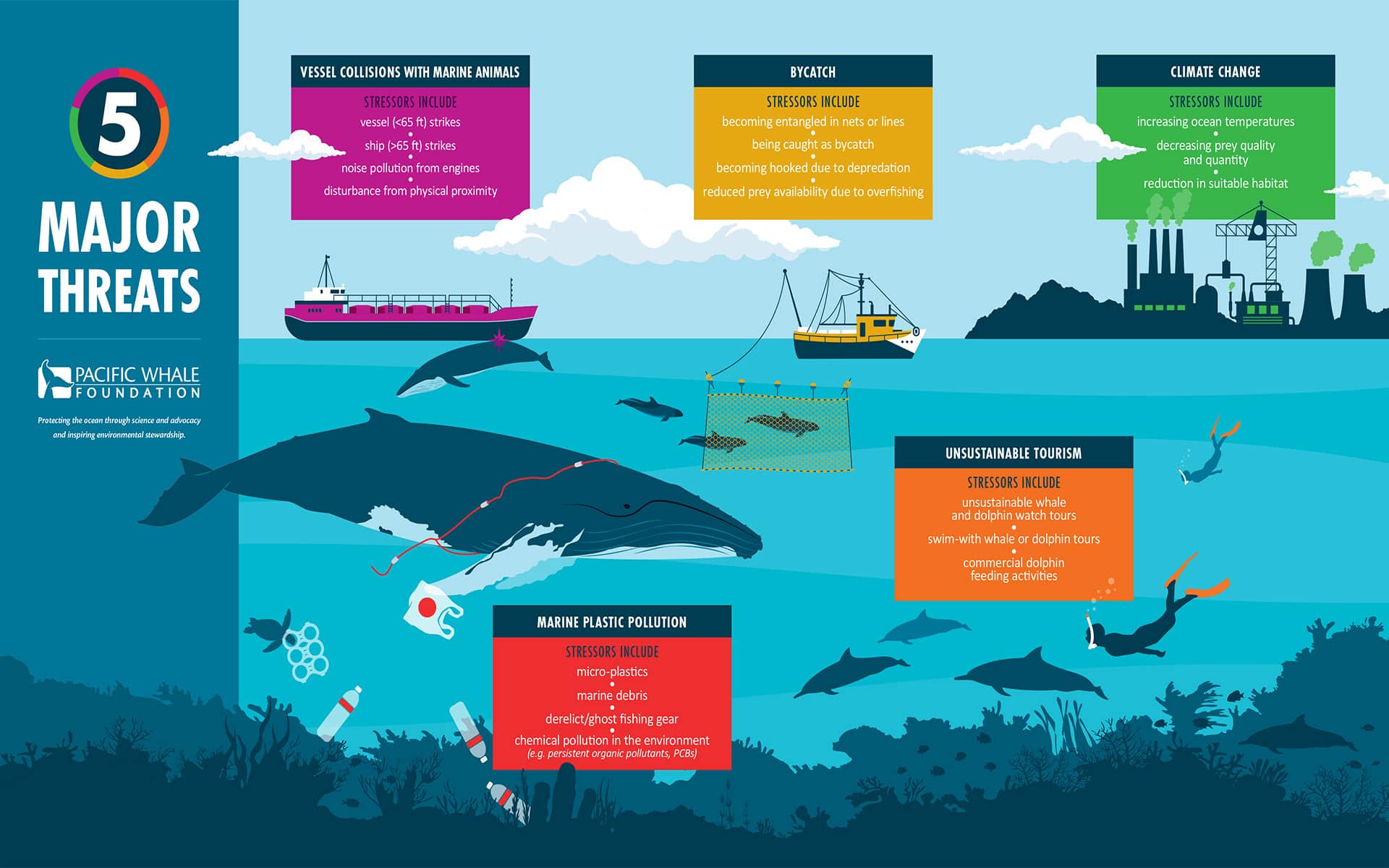
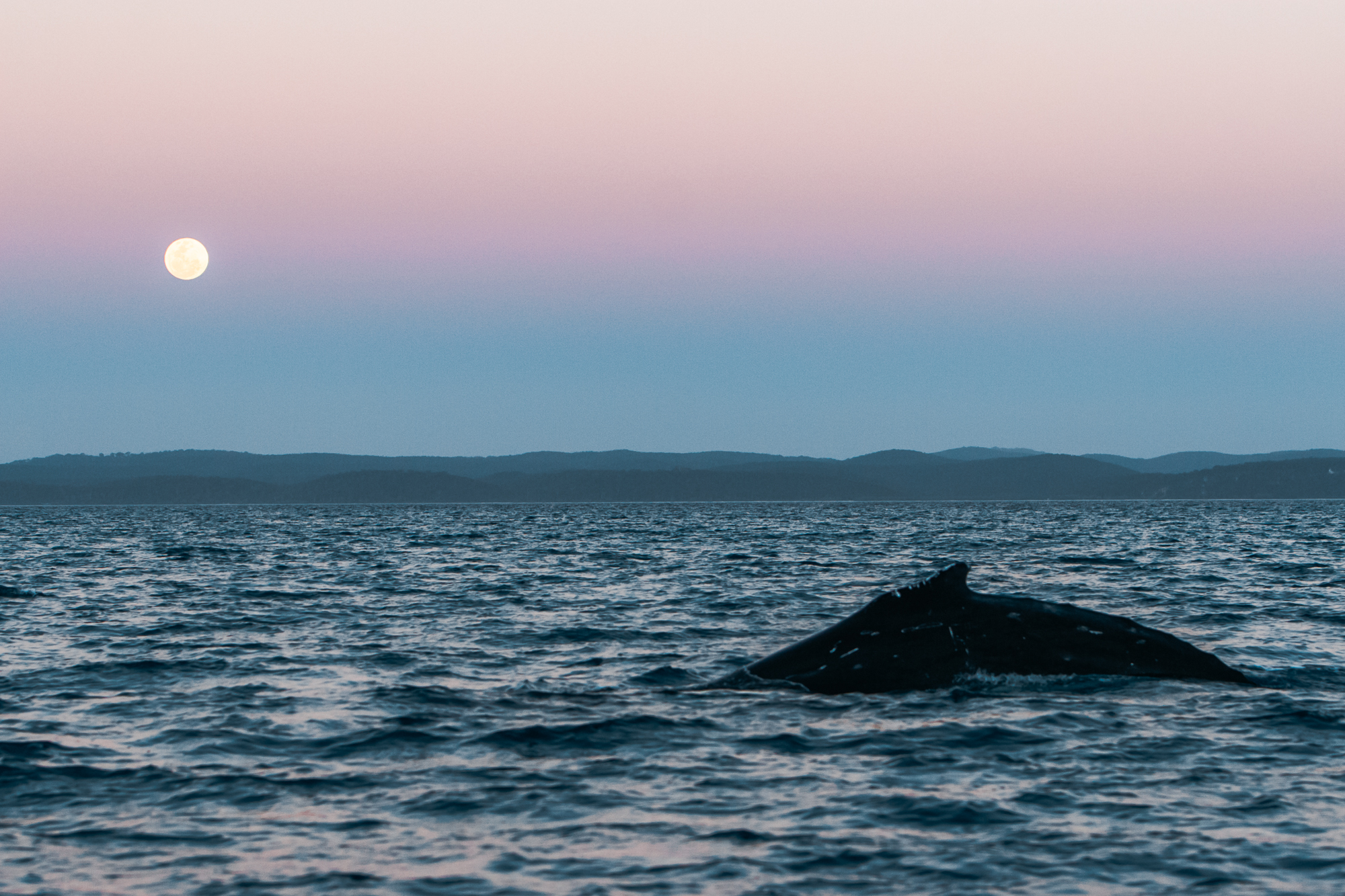
Between June and October, thousands of humpback whales migrate annually to Hervey Bay. While residents and visitors alike enjoy viewing humpback whales in their natural habitat, it is important to remember that our presence can affect marine wildlife and habitat.
Key recommendations resulting from the collaboration include:
- Speed limit of 15 knots or less, or minimal planing speed, within water 100 fathoms (600 ft) deep or less
- When approaching and departing whales, reduce vessel speed to six knots when within 400 yards
- Post a designated observer/lookout while underway
- Pay close attention to the time of day and time of year. Humpback whales begin to arrive in the waters of Hervey Bay typically in June, with peak season being July, August, and September with a drop in numbers in October. The more whales that are in the water, the more likely disturbance or collision is to happen. Whales are here both day and night. When traveling at night, you might want to reduce your speed even further since your chance of seeing a whale visually is reduced.
These voluntary recommendations are in addition to official regulations:
- 100-yard approach limit to humpback whales
- No ‘leapfrogging’ or in other words, if you see a whale traveling, you are not allowed to intentionally enter its path so that they approach you