
Four decades of humpback whale research in Hervey Bay, now focused on turning long-term data into results that shape how these waters are managed.
Hervey Bay & East Australia
Our Research
Since 1984
Four decades in Hervey Bay
Our work in Australia began in 1984, when PWF founder Greg Kaufman recognised Hervey Bay as a critical resting area for humpback mothers and calves on their way back to Antarctic feeding grounds. Early fluke photo-identification and song recordings from the bay were among the first ever compared with Hawaiʻi’s whales, helping establish the global significance of humpback whale songs.
PWF researchers were also among the first to study Migaloo, Australia’s famous white humpback. We confirmed his colouration in Hervey Bay in 1993 and recorded him singing in 1998, confirming he was a male. Later work traced humpback movement and connectivity along the East Australian coast, including the only documented case of a humpback moving between the east and west Australian populations, which are otherwise considered separate.
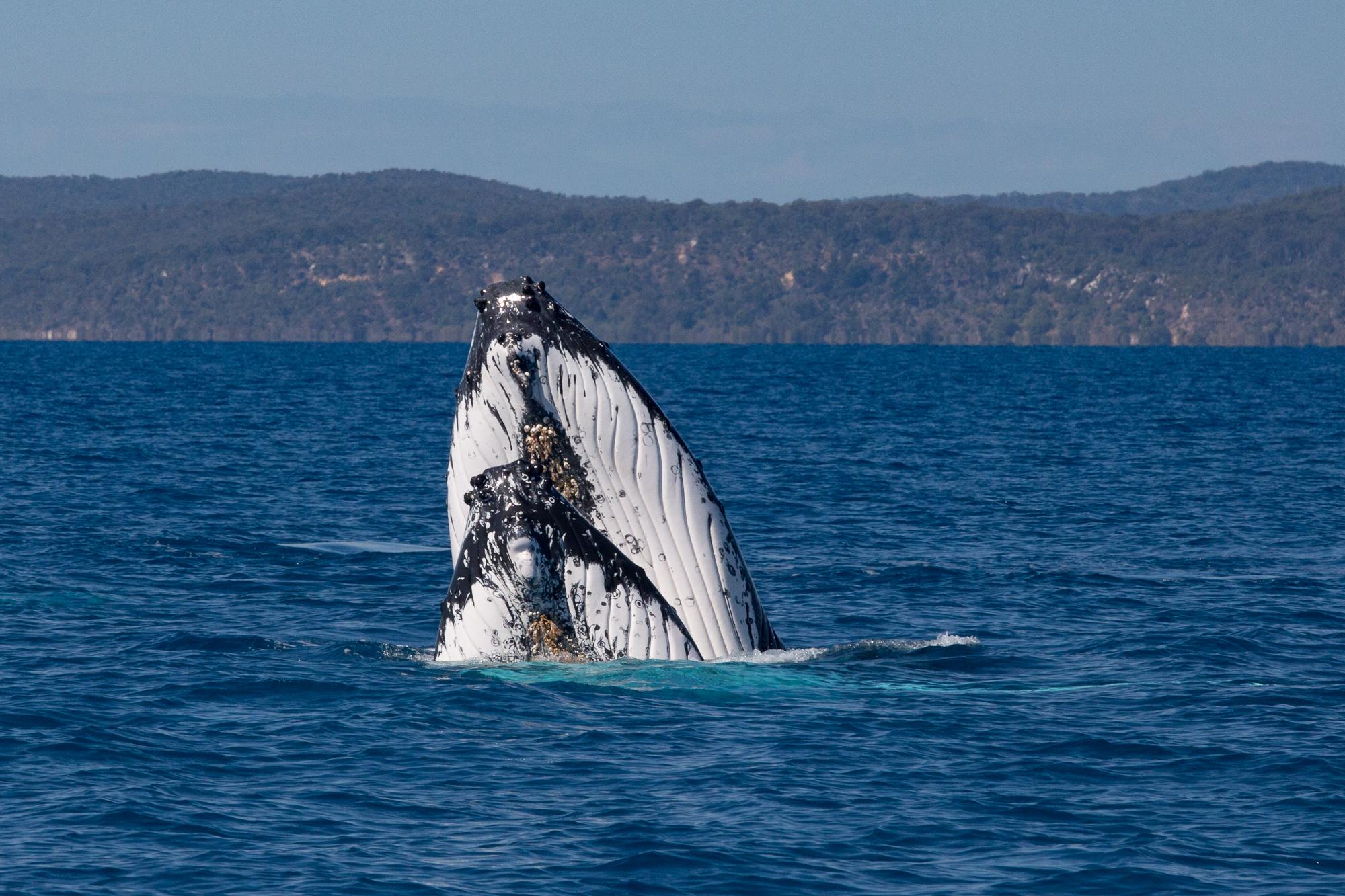 Photo: Migaloo / historic fluke ID
Where our research stands now
From the water to published science
Between 2021 and 2025 our team ran a dedicated five-year survey program in Hervey Bay, covering humpback whales, Indo-Pacific bottlenose dolphins, and the at-risk Australian humpback dolphin. That field program is now complete, and our focus has shifted from collecting data to publishing it.
A small team based in Hawaiʻi, working with Australian and international collaborators, is turning that dataset into peer-reviewed papers and management advice for the agencies responsible for these waters. Several studies are in review now, with more to follow through 2027.
PWF’s presence on the water continues every day. Our Eco-Adventures crews and naturalists log whale and dolphin sightings on every trip through the Whale & Dolphin Tracker app, and guests contribute fluke photos to our catalogue. The community keeps the data coming in.
134
research surveys, 2021–2025
~1,000
humpback images assessed for scars
893
humpback body-condition measurements
3
species monitored
Current studies
What we are working on
Each of these projects is led by PWF or a close partner and is built to answer a question a manager can act on.
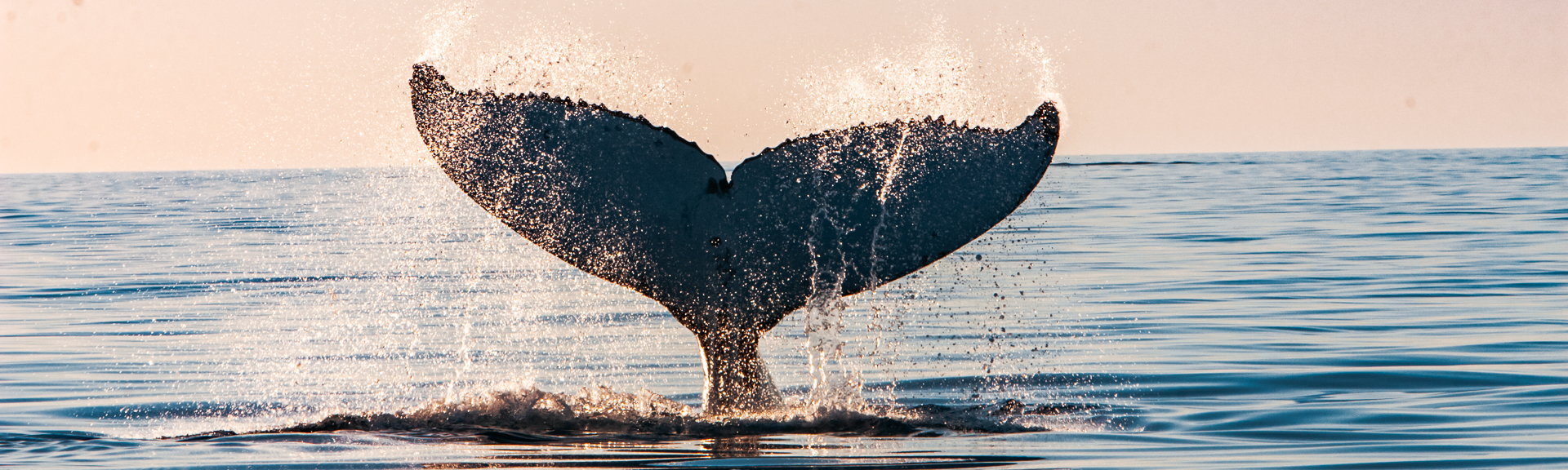
Dolphins of Hervey Bay
Where they are, how many, and how healthy. Our habitat mapping shows Australian humpback dolphins favour shallow water close to shore, while bottlenose dolphins range more widely. We are now estimating abundance for both species.
Why it matters
Feeds dolphin occurrence and habitat data to the Queensland Government ahead of the Great Sandy Marine Park zoning review.
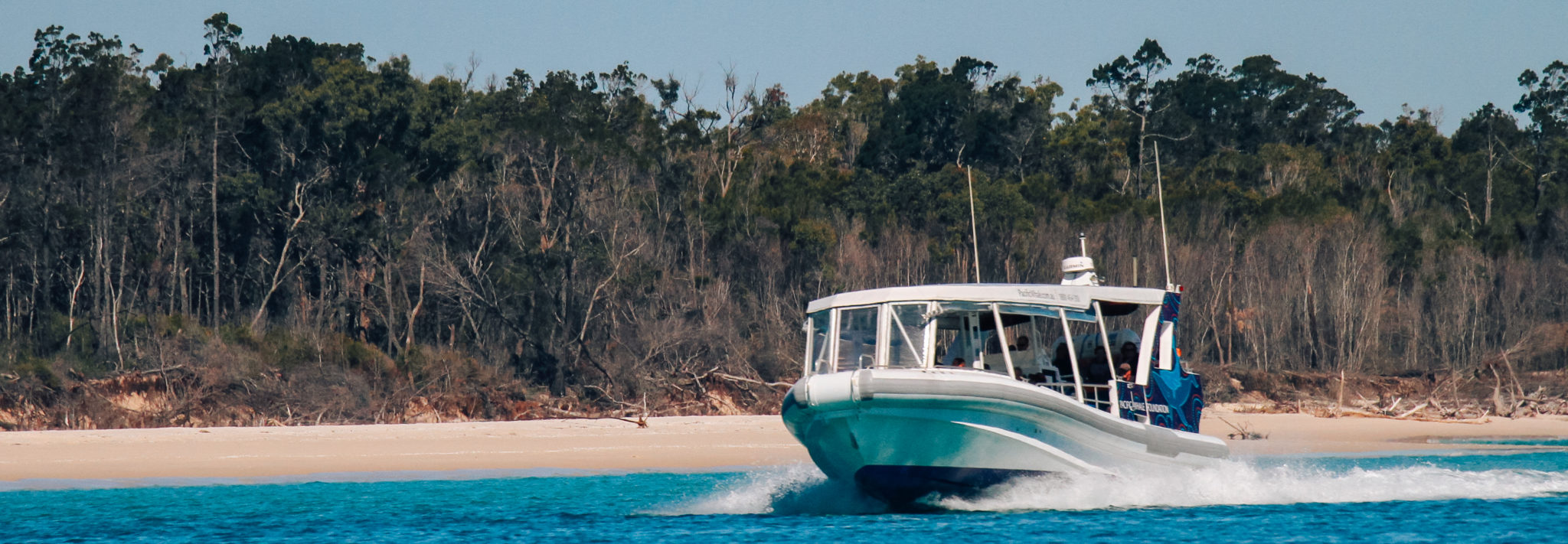
Humpbacks & human impact
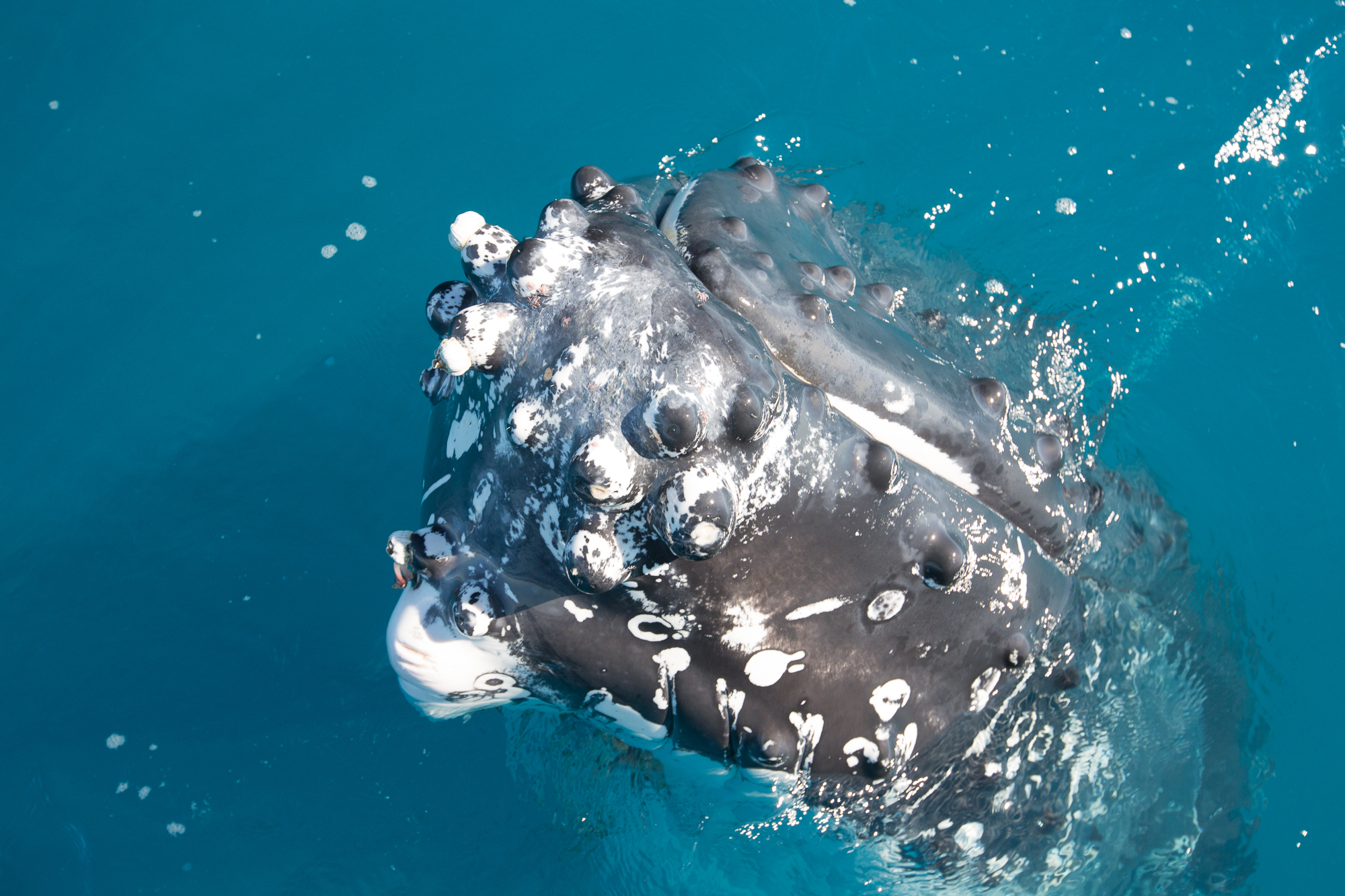
Using aerial imagery of close to a thousand whales, we are measuring non-lethal vessel strikes and fishing-gear entanglements along the East Australian migration.
Why it matters
Quantifies how often whales are struck or entangled, so mitigation can be targeted.
Humpback body condition
Led by Griffith University, we use drone measurements to track humpback body condition across seasons and years, a direct read on the health and resilience of the population.
Why it matters
Builds a baseline for detecting change in a recovering population over time.
Photo-ID catalogue
A life-history record, one whale at a time
PWF scientists established the first and longest-running humpback photo-identification project in the South Pacific. Our Southern Hemisphere Humpback Whale Catalogue is the largest curated database of photo-identified humpbacks in East Australia, with life histories for nearly 7,000 whales that visit Hervey Bay between July and October.
Every fluke is unique. You can contribute as a citizen scientist by donating your humpback fluke photos to the catalogue.
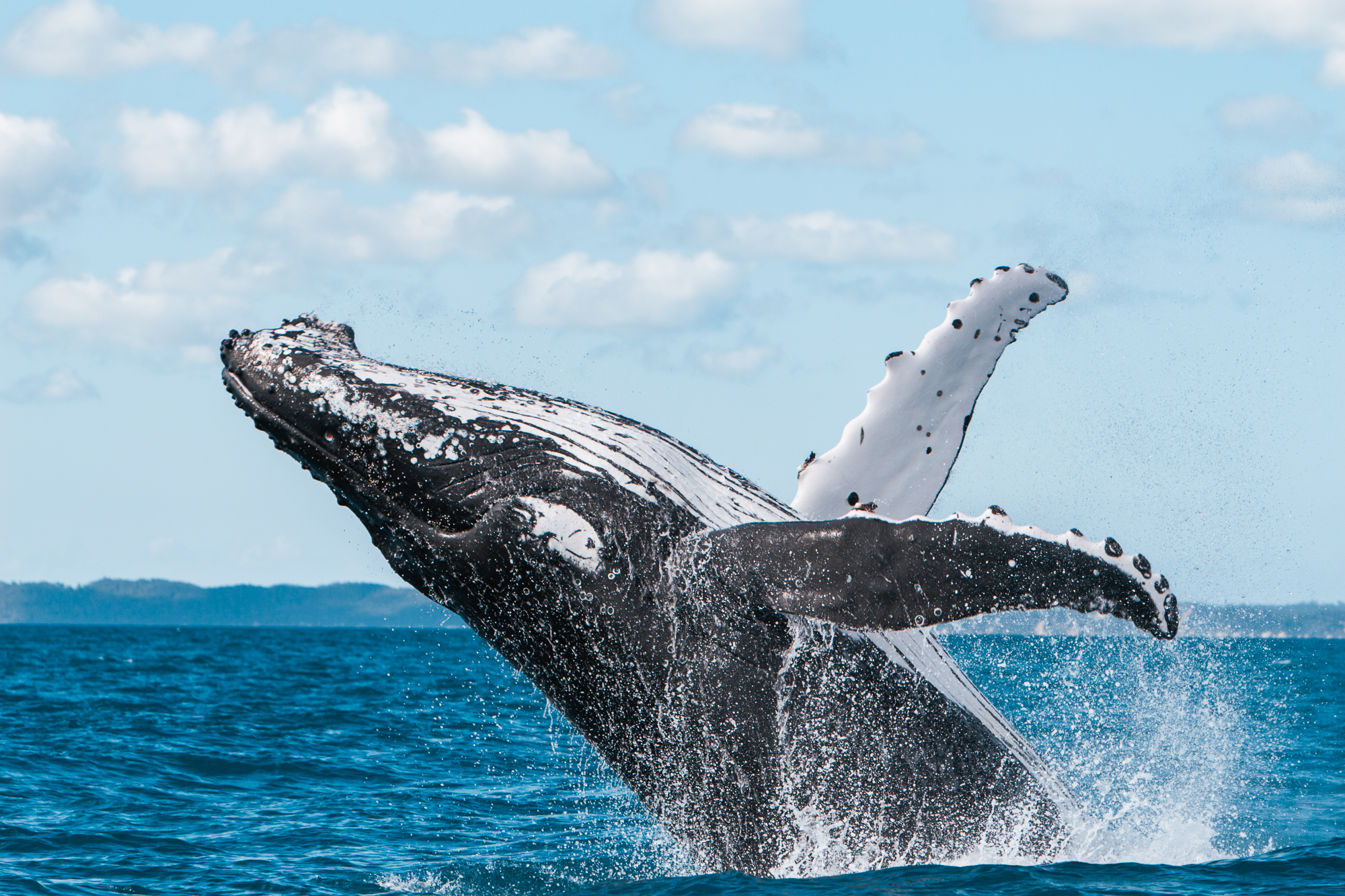 Photo: fluke ID grid
 Screenshot: live sightings map
Whale & Dolphin Tracker
Real-time sightings, logged by everyone
Our free Whale & Dolphin Tracker app lets anyone log humpback sightings in real time and upload photos from a phone. Every PacWhale vessel records its sightings on each trip, and those contributions feed a live map of the last seven days on the water in Hervey Bay.
Be Whale Aware & Dolphin Wise
Sharing the water responsibly
Between July and October, thousands of humpbacks pass through Hervey Bay. Our Be Whale Aware and Dolphin Wise guidelines, adopted by the Queensland Government, help operators and boaters keep their distance and reduce disturbance.
100 m
Recommended viewing distance, in line with the legal approach distance.
30 min
Suggested limit on time spent near pods with calves.
Publications
Peer-reviewed research from Australia
Four decades of work in Hervey Bay and along the East Australian coast, published in the scientific literature. Papers are listed newest first, with PDFs where available.
2026
Castro Ayala C, Stack SH, Marcondes M, Cardoso J, Cheeseman T, Currie JJ, Francisco A, Olio M, Righi B, Stuckenbrock S, Sousa-Lima RS. First evidence of bidirectional exchange between distant humpback whale breeding populations in eastern Australia and Brazil. Royal Society Open Science 13:260251. PDF
2025
McGovern B, Machernis AF, McCordic JA, Olson GL, Sullivan FA, Barber-Meyer SM, Currie JJ, Stack SH. Prevalence, composition, and behaviour of humpback whale groups containing multiple mother-calf pairs in East Australia. Aquatic Mammals 51(2):163. PDF
2024
Kela H, de Bie J, Paas KHW, Stack S, Franklin W, Franklin T, Meynecke JO. Assessment of humpback whale swimming speeds in two eastern Australian bays. Marine and Freshwater Research 75(18). PDF
2021
Stack SH, Sprogis KR, Olson GL, Sullivan FA, Machernis AF, Currie JJ. The behavioural impacts of commercial swimming with whale tours on humpback whales in Hervey Bay, Australia. Frontiers in Marine Science. PDF
2019
Stack SH, Currie JJ, McCordic JA, Machernis AF, Olson GL. Distribution patterns of east Australia humpback whales in Hervey Bay, Queensland: a historical perspective. Australian Mammalogy. PDF
2014
Constantine R, Steel D, Allen J, et al. Remote Antarctic feeding ground important for east Australian humpback whales. Marine Biology 161:1087-1093. PDF
2013
Rankin RW, Maldini D, Kaufman G. Bayesian estimate of Australian humpback whale calving interval under sparse resighting rates: 1987-2009. Journal of Cetacean Research and Management 13(2):109-112. PDF
2012
Tonachella N, Nastasi A, Kaufman G, Maldini D, Rankin RW. Predicting trends in humpback whale abundance using citizen science. Pacific Conservation Biology 18:297-309. PDF
2011
Forestell PH, Kaufman GD, Chaloupka M. Long-term trends in abundance of humpback whales in Hervey Bay, Australia. Journal of Cetacean Research and Management (Special Issue 3):237-241. PDF
2006
Rock J, Pastene LA, Kaufman G, Forestell P, Matsuoka K, Allen J. A note on East Australia Group V Stock humpback whale movement between feeding and breeding areas based on photo-identification. Journal of Cetacean Research and Management 8:301-305. PDF
2004
Naessig PJ, Lanyon JM. Levels and probable origin of predatory scarring on humpback whales in east Australian waters. Wildlife Research 31:163-170. PDF
2001
Forestell PH, Paton DA, Hodda P, Kaufman GD. Observations of a hypo-pigmented humpback whale off the east coast of Australia: 1991-2000. Memoirs of the Queensland Museum 47:437-450. PDF
2000
Garrigue C, Forestell P, Greaves J, Gill P, Naessig P, Patenaude N, Baker SC. Migratory movement of humpback whales between New Caledonia, East Australia and New Zealand. Journal of Cetacean Research and Management 2(2). PDF
1999
Chaloupka M, Osmond M, Kaufman G. Estimating seasonal abundance trends and survival rates of humpback whales in Hervey Bay (east coast Australia). Marine Ecology Progress Series 184:291-301. PDF
1998
Osmond MG, Kaufman GD. A heavily parasitized humpback whale. Marine Mammal Science 14(1):146-149. PDF
1987
Kaufman GD, Smultea MA, Forestell P. Use of lateral body pigmentation patterns for photo identification of east Australian (Area V) humpback whales. Cetus 7:5-13. PDF
This list covers peer-reviewed journal articles. PWF has also filed survey reports to the Queensland Parks and Wildlife Service, NSW National Parks and Wildlife Service, and the Great Barrier Reef Marine Park Authority since the 1980s, reported annually to the International Whaling Commission, and presented Australian findings at international conferences.
Management
Working with the people who manage these waters
Our Australian research is conducted under authorisation from the Queensland Government, with results shared directly with the agencies responsible for managing Hervey Bay and the Great Sandy Marine Park.